
Search Suffolk Resilience

What to Do Before or During a Flood
Flooding can happen quickly, so it is important to be prepared and act promptly when flood alerts or warnings are issued. Check whether flooding is expected in your area and sign up for flood warnings to receive updates by phone, text, or email.
Create Your Flood Plan: Having a flood plan helps you prepare for emergencies, protect your household, and know what actions to take before, during, and after a flood. Use the GOV.UK tools to create a tailored plan for your home:
Environment Agency’s Flood Action Week runs from 12-18 October 2026. Throughout this week, we encourage you to be Flood Ready.Four things you can do today, and every day, to help protect yourself, your family and your property are:
- Sign up for flood warnings.
- Check forecasts before travelling.
- Never drive or walk through floodwater.
- Prepare your home and emergency supplies.
Get ready for flooding in England:
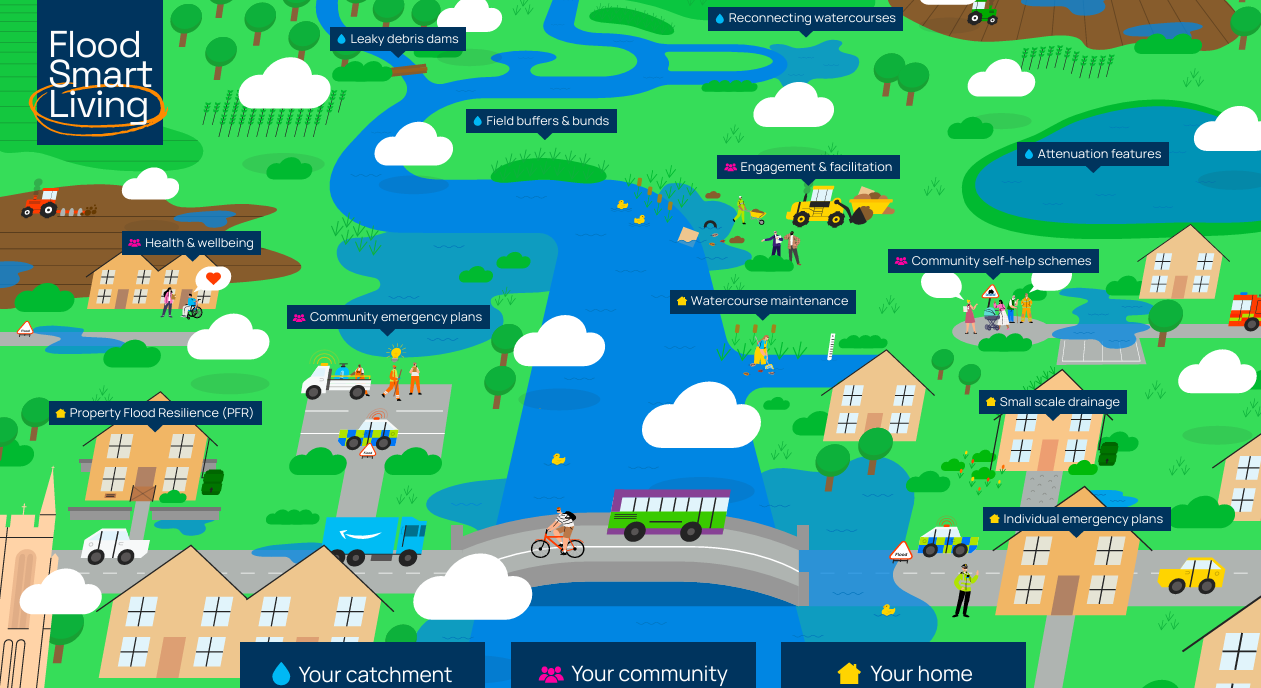
Suffolk County Council’s Flood Page has measures and ways to be flood resilient. The Flood Smart living Guide supports local communities at risk of flooding. It provides a range of measures that could be implemented, targeted at your catchment, your community and your home, providing useful advice and guidance to enable you to take the next step in becoming resilient to flooding.
Get Prepared
